Goodyear, AZ · ADEQ Compliance · Published May 2025 · 6 min read
Backflow Testing in Goodyear: What Every Homeowner Needs to Know Before the Notice Arrives
ADEQ requires annual backflow preventer testing for residential irrigation systems in Arizona. Goodyear’s four-utility landscape creates four separate reporting pathways. Here is what the requirement involves and what to do when your notice arrives.
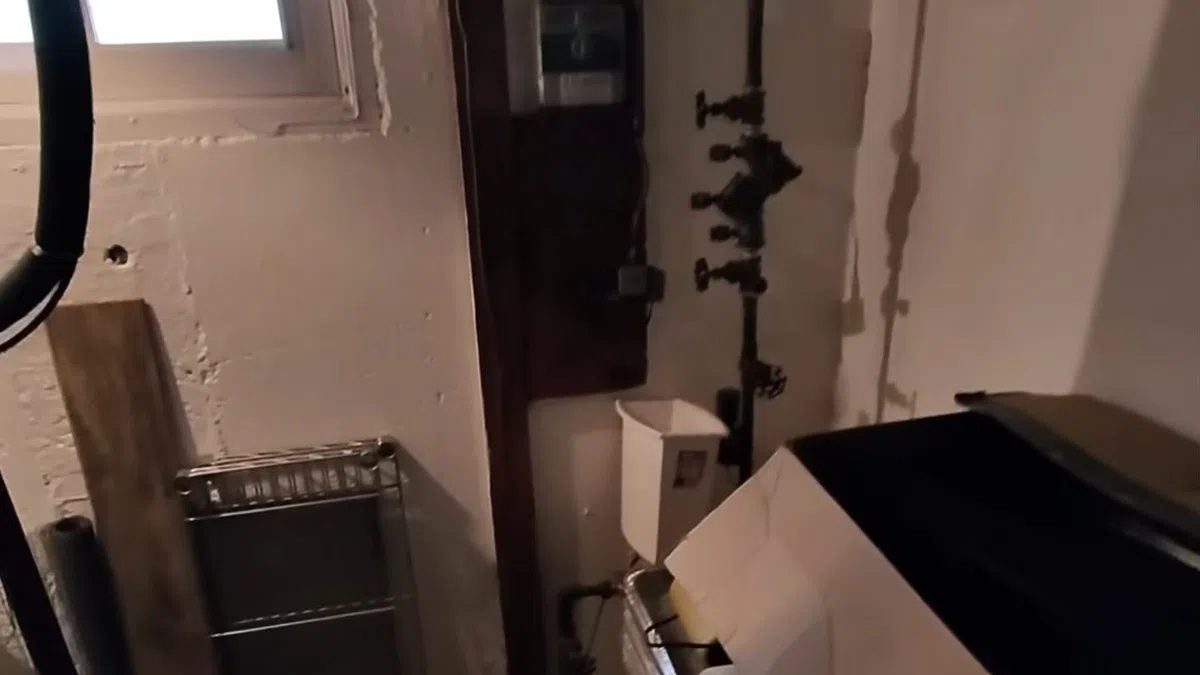
What backflow is and why it matters in Goodyear
Backflow is the reverse flow of water from a private plumbing system back into the public drinking water supply. Under normal operating pressure, water flows from the utility main, through the meter, and into the home. When pressure drops in the main — during a water main break, firefighting operations, or peak demand events — the pressure difference can reverse, pulling water from private systems back into the public supply.
For a residential irrigation system, the risk is that any water, fertilizer, pesticide, or other substance in the irrigation lines could be drawn into the drinking water supply during a backflow event. ADEQ’s cross-connection control program addresses this risk by requiring backflow prevention assemblies on residential irrigation connections and annual testing to confirm those assemblies are functioning correctly.
In Goodyear, this applies to all four utility service areas: City of Goodyear Water (south of I-10), EPCOR Water Arizona (Palm Valley and much of north Goodyear), Liberty Utilities (portions of north Goodyear), and Global Water Resources (Estrella Mountain Ranch). Each utility administers its own cross-connection control program and maintains its own database of assemblies requiring annual testing.
What the Arizona backflow testing requirement involves
The ADEQ cross-connection control program requires that backflow prevention assemblies on residential irrigation systems be tested annually by a certified backflow assembly tester and that the test results be reported to the applicable water utility. The tester uses calibrated differential pressure gauges to measure the performance of each check valve in the assembly and, for RPZ (reduced pressure zone) assemblies, to verify the relief valve function.
The test takes 20 to 30 minutes at the assembly location. Afterward, the tester completes the official test form and submits it to the appropriate utility’s cross-connection control program. A passing test result satisfies the annual requirement for that assembly. When we perform backflow testing for Goodyear homeowners, we identify which utility serves the address, use the correct test form and reporting process for that utility, and submit the result on the homeowner’s behalf.
The residential backflow preventer is typically located above ground near the main irrigation connection to the home, usually adjacent to the meter or at the exterior of the home near the irrigation controller. Most Goodyear residential irrigation systems use a DCVA (double check valve assembly) for standard residential applications or an RPZ assembly where higher-hazard connections (fertilizer injection, chemical application systems) are present.
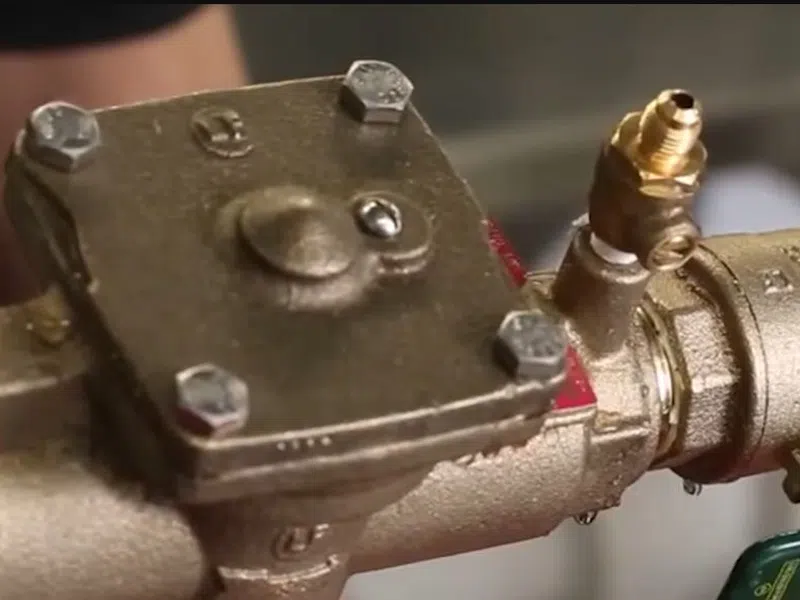
Types of residential backflow preventers in Goodyear
Two types of backflow prevention assemblies are used in Goodyear residential irrigation systems. Understanding which type is on your property tells you what the annual test involves.
A DCVA (double check valve assembly) has two independently acting check valves in series. If one check valve fails, the second provides backup protection. DCVAs are appropriate for low-hazard residential irrigation systems where the irrigation water is plain municipal water without any chemical additive. Most Goodyear residential irrigation systems use a DCVA. The DCVA test checks that each check valve holds at the required minimum pressure differential. A DCVA typically has a lower profile and smaller footprint than an RPZ and is often installed adjacent to the irrigation controller or near the meter.
An RPZ (reduced pressure zone) assembly provides a higher level of protection. It has two independently acting check valves plus a pressure differential relief valve between them. If either check valve fails to close fully, the relief valve opens to discharge water into the atmosphere rather than allow backflow. RPZ assemblies are required for higher-hazard connections, including irrigation systems with fertilizer injectors, chemical application equipment, or reclaimed water components. The RPZ test verifies both check valves and confirms the relief valve activates at the correct differential pressure. RPZ assemblies are larger than DCVAs and require a minimum installation height above grade to allow the relief valve to discharge freely.
Goodyear’s four-utility reporting landscape
Because four different utilities serve Goodyear addresses, annual backflow test results must go to four different receiving programs. Submitting a test result to the wrong utility does not fulfill the requirement for the address it covers. This is one source of confusion for homeowners who have changed addresses, moved from one part of Goodyear to another, or who are receiving a test notice from a utility whose name they do not immediately recognize.
City of Goodyear water customers submit results to the City of Goodyear utilities department. EPCOR customers submit to EPCOR’s cross-connection control program. Liberty Utilities customers submit to Liberty. Global Water Resources customers in Estrella Mountain Ranch submit to Global Water. We verify the specific utility from the property address before submitting any test result, and we use the utility-specific test form and reporting pathway for each.
HOAs in Palm Valley, Estrella Mountain Ranch, and PebbleCreek often send annual testing reminders to homeowners as part of their regular community maintenance communications. These reminders are coordinated with the applicable utility’s compliance tracking. If you received a notice from your HOA rather than directly from a utility, the requirement is the same and the deadline is real.
What happens when a backflow preventer fails the test
A backflow assembly that fails the annual test must be repaired or replaced and then retested before a passing result can be submitted to the utility. We carry repair parts for the most common Goodyear assembly brands — Watts, Wilkins, and Febco — and can often repair and retest at the same visit. For assemblies that are beyond repair, we replace with a new assembly, install it, and conduct the post-installation test at the same visit.
A failed assembly does not create an immediate enforcement action in most cases, but it does leave the homeowner non-compliant with the ADEQ program until the failing assembly is repaired and retested. In communities where the HOA tracks testing compliance, a missed or failed test can also create an HOA compliance issue. Getting the repair and retest done promptly resolves both. See our backflow testing and prevention page for full details on the testing and repair process.
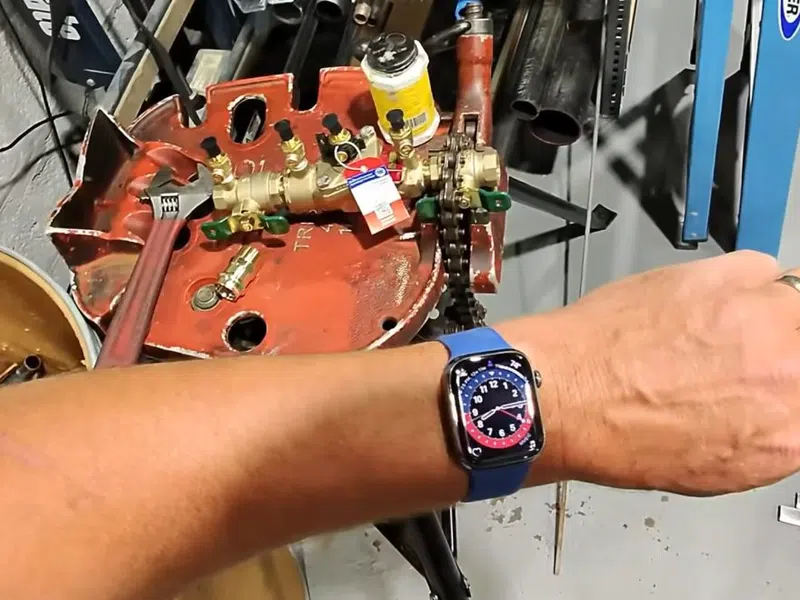
The inspection interval for DCVA assemblies and RPZ assemblies differs slightly in practice. A DCVA that passes the test may go the full 12 months without concern; an RPZ assembly with a marginally passing relief valve opening point is worth noting in the test record and retesting at 6 months in cases where the differential was close to the acceptable threshold. We note marginal results in the test documentation we provide and flag them clearly, so homeowners are aware when an assembly is passing but close to the failure threshold rather than passing comfortably.
Marginal test results deserve attention even when the assembly technically passes. An RPZ relief valve that opens at the low end of the acceptable differential pressure range is closer to failure than one that opens well within tolerance. We note marginal results in the documentation we provide, flag them explicitly, and recommend a 6-month retest when a reading is close to the acceptable threshold rather than comfortably within it.
Frequently asked questions
Do all Goodyear homeowners need annual backflow testing?
Homeowners with a dedicated irrigation system connection to the public water supply need annual backflow preventer testing per ADEQ requirements. Homes without a separate irrigation connection, or with only a hose bib with an attached anti-siphon device rather than a dedicated irrigation backflow assembly, have simpler cross-connection control requirements. If you are unsure whether your property has a testable assembly, we can confirm during a site visit.
What happens if I miss the backflow testing deadline?
ADEQ program enforcement is administered through the individual utilities, and consequences for missed testing vary. In practice, utilities typically send follow-up notices rather than immediately imposing penalties. However, continued non-compliance can result in formal notices of violation. In communities where the HOA tracks testing, missed testing may also trigger HOA compliance proceedings. The practical answer is to schedule the test as soon as you receive a notice rather than waiting.
Can I perform the backflow test myself?
No. Arizona requires that backflow assembly testing be performed by a certified backflow assembly tester holding current ADEQ certification. The test uses calibrated differential pressure gauges and follows a specific test procedure that must be documented on the official test form. The certified tester’s license number and signature are required on the submitted form. DIY testing does not satisfy the requirement and cannot be submitted to the utility.
Schedule backflow testing for your Goodyear home
ADEQ-certified testing with same-day report submission to your utility. Repair and retest in one visit if the assembly fails.
(623) 323-3182 — Call Now