Goodyear, AZ · Pipe Corrosion · Published April 2025 · 8 min read
How Long Do Copper Pipes Last in Goodyear’s Hard Water? (And When to Stop Repairing)
Manufacturer copper pipe ratings assume much softer water than Goodyear delivers. Here is the actual corrosion timeline in the West Valley, the signs that spot repair is no longer the right call, and what repiping to PEX offers instead.
What the manufacturer rating actually means
Type L copper pipe, the residential supply standard, carries an expected service life rating of 50 years or more in optimal conditions. Type K, used for underground service lines, is rated similarly. These ratings are based on water quality that is significantly softer than what Goodyear’s utilities deliver. In soft water markets — the Pacific Northwest, the Great Lakes region, much of the eastern United States — copper pipe routinely reaches 40 to 60 years of service life without significant corrosion problems. The manufacturer’s rating reflects those conditions.
In Goodyear, with hard water at 250 to 400 mg/L and the specific water chemistry of CAP Colorado River water, the corrosion timeline is compressed. The electrochemical reaction between the water chemistry and the copper pipe interior runs faster at higher mineral concentrations. Most Goodyear plumbers who have worked in the market for more than a decade put the effective copper life at 15 to 25 years for at-slab lines, with the shorter end applying to fittings and the longer end applying to straight pipe runs in less turbulent flow sections.
The corrosion mechanism in hard water
Hard water attacks copper supply lines through two mechanisms: electrochemical corrosion from the dissolved mineral ions, and pitting corrosion that concentrates at specific points in the pipe system. The electrochemical reaction involves calcium and magnesium ions in the water interacting with the copper metal at the pipe surface, gradually oxidizing the copper and creating copper salts that dissolve into the water. This thins the pipe wall incrementally, molecule by molecule, over years of service.
Pitting corrosion is more concentrated and more dangerous than uniform wall thinning. It tends to initiate at the point where the protective oxide layer on the copper interior has been disrupted — at solder joints, at manufactured fittings where the surface finish is different from drawn pipe, and at any point where turbulent flow creates differential oxygen concentration in the water adjacent to the pipe wall. These sites develop into small craters that deepen faster than the surrounding pipe thins, producing a pinhole failure that punches through the pipe wall at a specific location while the surrounding copper appears more intact.
This explains the pattern of slab leaks in Goodyear homes: they tend to appear first at elbows and tee connections rather than at the middle of long pipe runs, and they tend to cluster near the points where the pipe routing changes direction.
The actual Goodyear corrosion timeline
Based on what we see in West Valley homes, the corrosion timeline in Goodyear’s hard water follows a predictable curve. In the first 10 to 12 years, most copper supply systems show minimal failure risk. Corrosion is happening at the chemical level but has not yet progressed to pinhole stage at most locations. Some isolated early failures occur in homes with particularly aggressive water chemistry or sub-standard original installation quality.
From years 12 to 18, the failure rate accelerates. First pinhole events in fitting sections become common. At-slab leaks appear in homes where the corrosion has been running without water treatment. Homeowners begin to notice slab leak symptoms for the first time. This is the age range for most of Palm Valley’s 2000s construction and the older PebbleCreek sections.
From years 18 to 25, failures become broadly distributed across the supply system. What started as isolated pinhole events at fittings spreads to include the pipe body in high-corrosion sections. A home that had its first slab leak at year 15 has likely had two or three more by year 22. The economics of repeated repair versus a one-time repipe shift decisively in favor of repiping during this period for most homeowners.
Beyond 25 years in Goodyear’s hard water without treatment, copper supply systems are typically well into widespread failure territory. Homes in the older PebbleCreek sections from the early 1990s, and the oldest Estrella Mountain Ranch phases, are in this range now. We assess many of these homes where a homeowner is facing their fourth or fifth slab leak repair in a decade and has never had a frank conversation about whether continued repair makes economic sense.
When to stop repairing and repipe
The repair-versus-repipe decision has a clear financial framework, though it requires an honest assessment of the pipe condition that goes beyond the current leak location. Several indicators suggest the tipping point has been reached.
First, multiple repairs within a short period. If a Goodyear home has had two or more slab leak repairs in the past three to five years, the pipe condition overall is the story, not the individual leak locations. The next repair is already developing somewhere else in the system. Each slab repair involves a concrete access cut, flooring disruption, plumbing repair, concrete patching, and flooring restoration — costs that add up quickly and that will be incurred again at the next leak.
Second, pipe wall condition visible at the repair access. When we open a slab for a confirmed leak location, we examine the copper visible in the access trench. If we can see extensive pitting, green oxidation throughout the pipe run, or visibly thinned sections adjacent to the confirmed failure, we flag it. The pipe condition assessment during a repair visit is one of the clearest indications of whether the home is a repair candidate or a repipe candidate.
Third, insurance and disclosure considerations. In Arizona, a homeowner who has knowledge of recurring slab leaks is required to disclose that history when selling. Buyers receiving disclosure of multiple slab leak repairs often request a price reduction or a repair credit. A repipe before listing eliminates the disclosure obligation for pipe condition and can protect the sale price.
What PEX repiping offers that copper cannot
PEX, or cross-linked polyethylene, does not react chemically with the calcium and magnesium in Goodyear’s hard water. The smooth interior bore of a PEX supply line does not develop electrochemical pitting. Scale does not adhere to PEX interior walls the way it does to copper. A PEX supply system in Goodyear will not develop slab leaks from hard water corrosion, period.
The other advantages matter in a Goodyear repipe context: PEX is flexible, which allows routing through attic spaces with fewer fittings and joints, reducing the total number of connection points in the system. Goodyear’s mild climate means attic routing is practical year-round (no freezing concern), and routing through the attic minimizes wall disruption compared to the wall-by-wall approach required in cold climates. A PEX repipe in a Goodyear home can typically be accomplished with significantly less drywall opening than a cold-climate repipe would require.
See our whole-home repiping page for details on what the process involves and what to expect during a Goodyear PEX repipe.
Frequently asked questions
Can I see copper corrosion before a leak develops?
In some cases, yes. Green or blue-green staining on or around copper pipe surfaces, visible where pipes are accessible in a utility area or through cleanout access, indicates active oxidation. White or light green mineral deposits at solder joints are another visible sign. Neither of these means a failure is imminent, but they indicate the corrosion process is active. An acoustic or thermal scan can also detect early-stage pitting that has not yet produced a pinhole.
What is the typical cost to repipe a Goodyear home?
A whole-home copper to PEX repipe for a 3 to 4 bedroom Goodyear slab-on-grade home typically runs $8,000 to $16,000 depending on the home's size, number of bathrooms, accessibility of attic routing, and the number of fixture connections required. This includes the PEX pipe, fittings, manifold installation, permit filing, and all labor. It does not typically include drywall patching at the access points, which is performed by a drywall contractor. We provide a written estimate after an assessment visit.
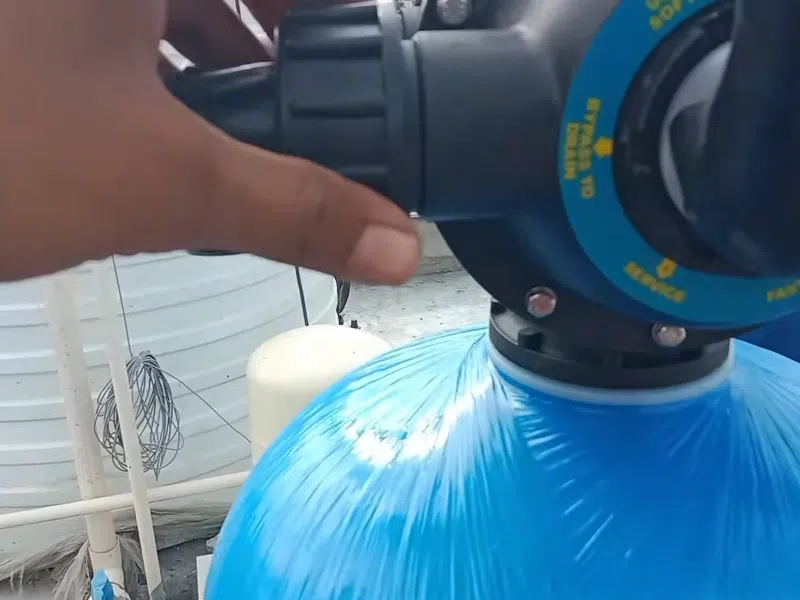
Does a water softener prevent copper corrosion in Goodyear?
A whole-home water softener significantly slows the corrosion rate by removing the calcium and magnesium that drive the electrochemical reaction. It does not stop corrosion entirely, since other water chemistry factors also play a role. A softener installed in a home with 5-year-old copper can extend the pipe's effective service life by a meaningful margin. A softener installed in a home where copper is already showing widespread corrosion provides less benefit — the corrosion process that has been running for 20 years has already progressed too far for softening to change the outcome substantially.
Get a free repipe assessment for your Goodyear home
We assess your pipe condition on-site and give you an honest repair vs. repipe recommendation based on what we find.
(623) 323-3182 — Call Now