Goodyear, AZ · Water Quality · Published January 2025 · 8 min read
Why Goodyear Water Is So Hard — and What It’s Doing to Your Plumbing
All four Goodyear utilities deliver water in the 250 to 400 ppm range. That mineral content is doing measurable damage to every copper pipe, water heater, and appliance in your home right now. Here is what is happening and how to slow it down.
Goodyear’s water comes from a very hard source
Water hardness is a measure of dissolved calcium and magnesium content, expressed in milligrams per liter (mg/L) or grains per gallon (gpg). Water below 60 mg/L is considered soft. Water above 180 mg/L is classified as very hard. Goodyear’s water tests consistently between 250 and 400 mg/L depending on the utility and the season, placing it firmly in the very hard category.
All four of Goodyear’s water providers draw from the same regional sources: the Colorado River via the Central Arizona Project (CAP) canal, and local groundwater wells. The CAP water carries calcium and magnesium picked up as the Colorado River flows through the limestone and dolomite geology of the Rocky Mountains. By the time that water reaches Goodyear, it has a mineral content two to three times higher than the national median household supply.
The four utilities that serve Goodyear addresses are the City of Goodyear Water Department (south of I-10), EPCOR Water Arizona (Palm Valley and north Goodyear), Liberty Utilities (portions of north Goodyear), and Global Water Resources (Estrella Mountain Ranch). Each blends CAP water with groundwater in proportions that vary by season and supply conditions, which is why hardness readings can differ between addresses and between months. The 250 to 400 ppm range captures the typical variation across all four providers across the full year.
What those numbers mean inside your pipes
When hard water sits in or flows through copper supply lines, a slow electrochemical reaction begins. Calcium and magnesium ions in the water react with the copper surface at a molecular level, gradually attacking the pipe interior. At fittings, elbows, and tees, where water velocity changes direction and creates turbulent flow, this corrosion accelerates. Over years and decades, the copper wall at these locations thins until a pinhole forms.
At 250 to 400 mg/L, Goodyear’s hard water is aggressive enough that most copper supply lines in the West Valley show meaningful corrosion by the 15 to 20 year mark. Homes built in the 1990s, which now make up the majority of Palm Valley, Estrella Mountain Ranch, and many PebbleCreek sections, are entering or have entered this window. The 2000s construction in Centerra, newer Buckeye, and Surprise is approaching it.
The specific symptom is a slab leak: a pinhole failure in the copper supply line below the concrete foundation. The pressurized water escapes through the hole, migrates through the sand bed under the slab, and eventually produces visible symptoms: a warm floor section, the sound of running water when all fixtures are off, or an unexplained water bill increase. See our slab leak detection and repair page for the full detection process.
What hard water does to your water heater
A tank water heater heats water by applying heat to the bottom of the tank. In Goodyear’s hard water, calcium and magnesium in the incoming water precipitate out when heated and settle on the tank floor as sediment. This sediment layer is a thermal insulator. As it thickens, the heating element or gas burner has to work harder and longer to heat water through it, using more energy per gallon heated.
The effect compounds over years. A tank floor with 1 to 2 inches of calcium sediment generates localized overheating at the tank base, which accelerates corrosion of the steel tank walls from the inside. The sacrificial anode rod, which is designed to absorb corrosion that would otherwise attack the tank, depletes faster in hard water as it works against the mineral-laden water chemistry. Without replacement, the anode is consumed before the next service interval and the tank begins corroding directly.
The practical result is that tank water heaters in Goodyear without any maintenance or water treatment typically last 7 to 10 years instead of the 12 to 15 year service life they are rated for in soft water. Annual sediment flushing, anode rod inspection and replacement, and a whole-home water softener upstream of the heater all extend effective service life. See our water heater repair and water heater installation pages for service options.
What hard water does to fixtures, faucets, and appliances
Scale accumulates on every surface that hard water contacts. The visible signs are familiar: white mineral deposits around faucet aerators, showerhead spray holes that clog and redirect spray, soap scum that won’t rinse off, and spots on glass shower surfaces. These are the surface expressions of the same mineral deposition happening inside every component.
Inside a faucet cartridge, scale particles act as an abrasive against the cartridge seals on every handle movement. Faucet cartridges in Goodyear homes without water treatment last 3 to 5 years rather than the 8 to 10 year life they achieve in soft water markets. Dishwashers accumulate scale on heating elements and spray arms. Washing machines develop scale in hot water lines and inlet screens. Refrigerator ice makers scale at the water inlet valve.
None of this is dramatic in the short term. But over a 10 to 15 year period, the cumulative cost of shortened appliance life, increased energy use from scaled heating elements, and repeated fixture repair adds up significantly in a Goodyear home not protected by water treatment.
What you can do about Goodyear’s hard water
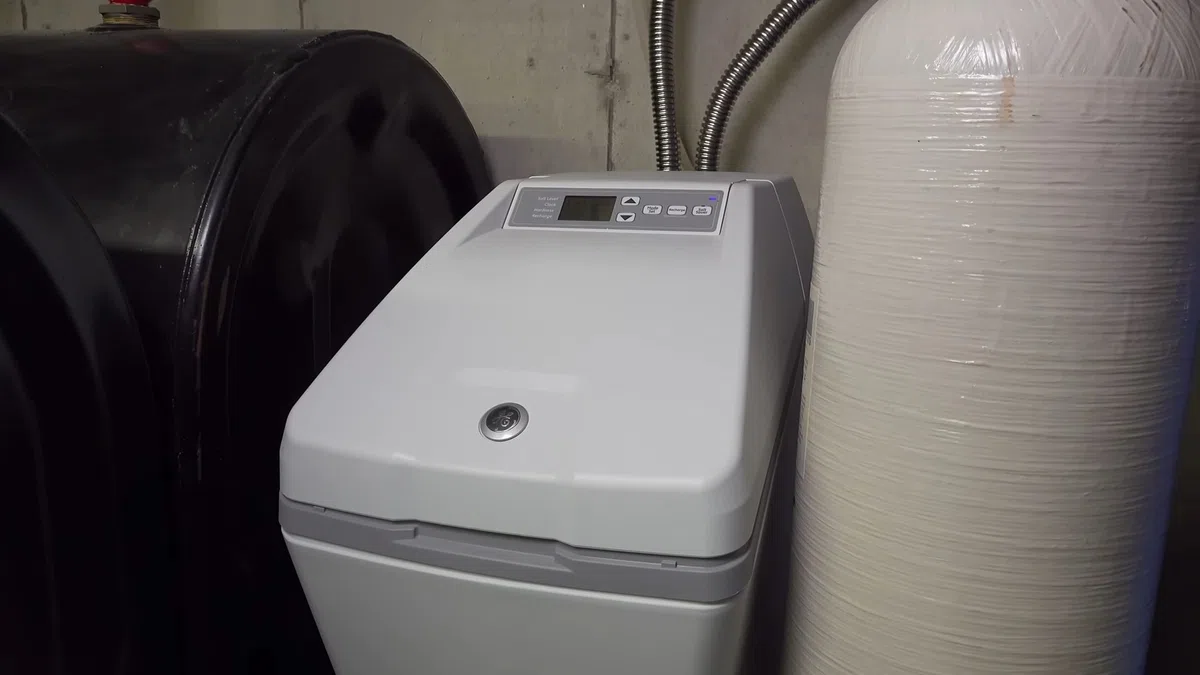
A whole-home ion-exchange water softener addresses the hardness at the point of entry. The softener passes water through a resin bed that swaps calcium and magnesium ions for sodium ions. The treated water has the same pH and is safe for all household uses, but it no longer deposits mineral scale on pipe interiors, water heater tanks, or fixtures. Softeners require periodic regeneration with salt and periodic resin maintenance, but they protect every water-using appliance and fixture in the home simultaneously.
A reverse osmosis system at the kitchen sink addresses drinking and cooking water quality to a higher standard than softening alone. The RO membrane removes not only hardness minerals but also chloramines from CAP water treatment and other dissolved solids that affect taste. The combination of a whole-home softener and an under-sink RO system is the standard water treatment configuration for Goodyear homes seeking full protection.
For homes where a water heater has already accumulated significant sediment, an annual flush removes loose sediment and extends the remaining service life. An anode rod inspection identifies whether the sacrificial protection is still active. These are maintenance measures that slow further damage; they do not reverse years of scale accumulation. See our water softener installation page for sizing and installation options in the Goodyear market.
Frequently asked questions
How hard is Goodyear water compared to the national average?
The U.S. Geological Survey classifies water above 180 mg/L (about 10.5 gpg) as very hard. Goodyear's four utilities typically deliver water at 250 to 400 mg/L (15 to 23 gpg), which is significantly above that threshold. The national median household water hardness is approximately 100 to 150 mg/L. Goodyear water is two to three times harder than a typical American household supply.
Why does Goodyear have such hard water?
The primary source is the Colorado River via the Central Arizona Project (CAP) canal. Colorado River water picks up calcium and magnesium as it flows through the limestone and dolomite geology of the Rocky Mountains and Colorado Plateau. By the time it reaches the CAP canal and Goodyear's water treatment plants, it carries a high mineral load. Local groundwater wells, which some Goodyear utilities blend with CAP water, can add additional hardness from the regional aquifer geology.
Will a water softener damage my copper pipes?
No. A properly sized and maintained ion-exchange softener replaces calcium and magnesium with sodium. The sodium-bearing water is not corrosive to copper and will not cause new pinhole failures. It does slow or stop the electrochemical corrosion that hard water produces, protecting remaining pipe life. Some plumbers raise concerns about very low-mineral water and copper in specific conditions, but those situations involve demineralized or distilled water, not softened water, which retains its pH buffering capacity.
How much does hard water shorten the life of a water heater in Goodyear?
A tank water heater in soft water at a properly set temperature typically lasts 12 to 15 years. In Goodyear's hard water without annual sediment flushing, the effective service life drops to 7 to 10 years for most homeowners. Sediment accumulation on the tank bottom insulates the heat exchanger, causing overheating at the base and accelerating corrosion. Annual sediment flushing and a whole-home softener upstream can push tank heater life back toward the manufacturer's rated service expectancy.
Protect your Goodyear home from hard water damage
Water softener installation sized to your utility and household. Paired RO systems available. Free estimates across the West Valley.
(623) 323-3182 — Call Now