Goodyear, AZ · Water Treatment · Published July 2025 · 6 min read
Why Your Goodyear RO System Is Slowing Down (And the Maintenance Schedule That Fixes It)
A slow RO faucet is almost always a maintenance issue in Goodyear’s hard water. The pre-filters, membrane, and storage tank pressure each have their own maintenance interval and failure mode. This guide covers how to diagnose which component is causing the slowdown.
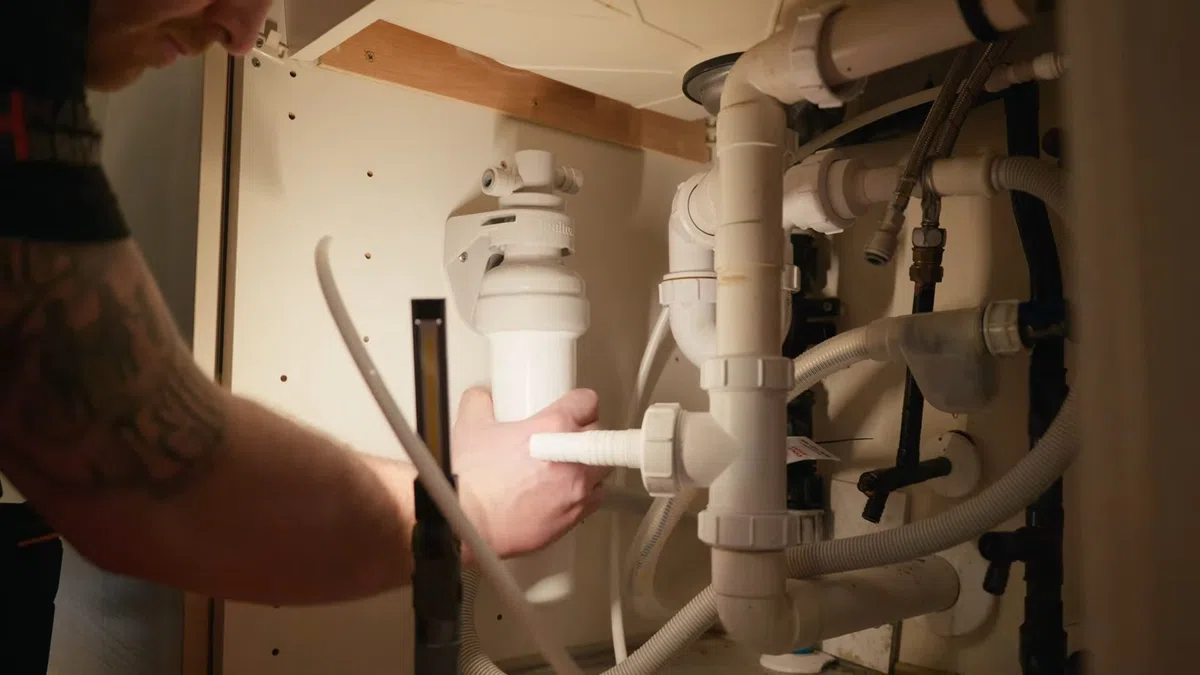
The three most common causes of slow RO output in Goodyear
A reverse osmosis system produces water by pushing pressurized tap water through several filtration stages ending at the semi-permeable RO membrane. The water that passes through the membrane fills the pressurized storage tank, and the dedicated RO faucet draws from that tank. Slow output from the RO faucet in Goodyear is almost always one of three problems: clogged pre-filters, an exhausted RO membrane, or low storage tank pressure. The symptoms of each overlap, which is why a diagnostic sequence matters before replacing components.
Clogged pre-filters are the most common cause in Goodyear. The sediment pre-filter and carbon pre-filter upstream of the membrane protect the membrane from particles and chloramines that would damage it prematurely. In Goodyear’s 250 to 400 mg/L hard water and CAP-sourced water supply, these filters accumulate mineral particles and organic compounds faster than in softer or cleaner water markets. A severely clogged sediment pre-filter restricts the supply pressure at the membrane below the level needed for normal production rate. A clogged carbon filter similarly reduces effective pressure.
An exhausted RO membrane produces water more slowly as its pores become fouled with accumulated contaminants. Unlike pre-filters, which restrict flow from the outside in, a fouled membrane allows water through but at reduced efficiency. The clearest sign of membrane exhaustion is poor water quality at the RO faucet rather than just slow flow — if your TDS meter (total dissolved solids) shows that the water from the RO faucet is no longer significantly lower than tap water, the membrane is no longer filtering effectively and needs replacement.
Low storage tank pressure is the third cause. The storage tank has a pressurized air bladder that pushes water out to the faucet. If the air charge in the bladder has dropped, the tank cannot push water to the faucet at normal flow rate. A tank that takes a long time to refill and dispenses water slowly from the start (even when the tank should be full) suggests a low air charge rather than a filter problem.
The Goodyear RO maintenance schedule
The maintenance intervals for under-sink RO systems depend significantly on whether a whole-home water softener is installed upstream of the RO system.
Without a softener upstream, Goodyear’s hard water puts maximum load on the pre-filters and the membrane. Sediment and carbon pre-filters should be replaced every 6 months. The RO membrane should be inspected or replaced every 12 to 18 months. The post-carbon polishing filter, which improves taste at the faucet, should be replaced when the membrane is replaced.
With a whole-home water softener installed upstream of the RO, the mineral load at the pre-filters and membrane is significantly reduced. Pre-filter life extends to 12 months. Membrane life typically extends to 24 to 48 months depending on the household flow volume through the system. This extended maintenance interval is one of the most tangible operational benefits of pairing a softener with an RO system in Goodyear — the RO maintenance cost over a 4-year period with a softener is typically less than half what it is without one.
How to diagnose which component is causing your slowdown
The diagnostic sequence starts at the simplest and least expensive component and works toward the more complex.
Step 1: Check when the pre-filters were last replaced. If it has been more than 6 months without a softener or more than 12 months with a softener, replace the pre-filter cartridges first before doing anything else. This resolves the most common cause at the lowest cost. If the flow rate improves after pre-filter replacement, the diagnosis is complete.
Step 2: Test the water quality from the RO faucet with an inexpensive TDS meter. If the TDS reading from the RO faucet is within 10 to 15 percent of the tap water TDS, the membrane is no longer filtering effectively and needs replacement. If the TDS reduction is still significant (typically 85 to 95 percent or better), the membrane may still have useful life and the slow flow is not from membrane exhaustion.
Step 3: Check storage tank pressure. With the RO system shut off at the feed valve and the tank depleted by opening the RO faucet until water stops, measure the air pressure at the Schrader valve on the bottom of the tank with a tire pressure gauge. The typical correct pre-charge for a residential RO tank is 6 to 8 psi when the tank is empty. If the pressure is below 4 psi, the bladder has lost its charge and needs to be recharged with a tire pump or replaced if the bladder has failed. Adding air pressure to a depleted tank is a simple fix that is often overlooked.
What hard water does to the RO membrane in Goodyear
In Goodyear’s unsoftened water, calcium carbonate precipitation on the membrane surface is the primary membrane fouling mechanism. As water is pushed through the membrane under pressure, the concentrated reject stream carries dissolved calcium carbonate in increasingly concentrated form. At the membrane surface, this concentration can exceed the solubility limit for calcium carbonate, causing it to precipitate directly onto the membrane in a process called scaling. Scaling reduces the effective filtration area of the membrane over time.
A softener upstream prevents this by removing calcium and magnesium before they reach the membrane. Without a softener, the membrane faces the full 250 to 400 mg/L calcium carbonate load on every production cycle. Over 12 to 18 months in Goodyear hard water, this scaling can progress to the point where the membrane’s production rate and quality are both significantly degraded. The combination of pre-filter replacement on schedule and a softener upstream gives Goodyear RO membranes the best chance of reaching their rated 2 to 3 year service life.
See our reverse osmosis installation page for installation, filter replacement, and system service options in Goodyear.
The post-filter, sometimes called a polishing filter or taste filter, is the final stage after the storage tank in most under-sink RO systems. Water from the tank passes through this filter on its way to the RO faucet, removing any taste or odor picked up from the tank or supply lines since the last time the faucet ran. The post-filter typically needs replacement when the membrane is replaced — about every 12 to 18 months without a softener and every 24 to 48 months with one. Skipping the post-filter replacement while replacing the membrane is a common oversight that leaves the improved water quality partially undermined by a spent final stage.
Frequently asked questions
How do I know if my RO membrane needs replacing?
Test the water from your RO faucet with a TDS meter and compare it to unfiltered tap water. A functioning membrane should reduce TDS by 85 to 95 percent. If your RO water tests at 80 mg/L and your tap water tests at 400 mg/L, that is an 80 percent reduction — still working but approaching the end of effective life. If the reduction is below 75 percent, the membrane should be replaced. TDS meters are inexpensive and available at hardware stores.
How do I check the pressure in my RO storage tank?
Shut off the RO system at the feed valve under the sink. Open the RO faucet and let it run until the water stops completely — this empties the tank. Then use a standard tire pressure gauge on the Schrader valve at the bottom of the tank. The reading should be 6 to 8 psi for most residential tanks. If it reads below 4 psi, the tank needs to be recharged with a bicycle pump or tire pump. If it holds no pressure after recharging, the internal bladder has failed and the tank needs to be replaced.
Does a water softener really extend RO membrane life in Goodyear?
Yes, significantly. In Goodyear hard water without a softener upstream, RO membranes typically need replacement every 12 to 18 months. With a whole-home water softener installed upstream of the RO, removing calcium and magnesium before they reach the membrane, life typically extends to 24 to 48 months. Over a 4-year ownership period, the membrane replacement cost difference is substantial, and the pre-filter change frequency also drops from every 6 months to every 12 months.
Schedule RO filter service or installation in Goodyear
Filter replacement, membrane service, and new RO installation across the West Valley. We service all major brands.
(623) 323-3182 — Call Now